
Revenue tells a founder what happened. Retention, delegation, and founder workload can offer a much better clue about what happens next.
There is a point in a business when being busy stops feeling impressive and starts feeling a little suspicious. The calendar is packed, customers need answers, leads are waiting on follow-ups, and the owner is still the person everyone turns to whenever something gets stuck. Revenue may even be moving in the right direction, but somehow the workday keeps stretching right along with it.
That is where plenty of founders get tripped up. More activity does not automatically mean more growth. Sometimes it simply means the business has found new ways to use up more of the owner’s time. StartupAdvisory.ai addresses that problem through its Growth OS, Dedicated Growth Assistant, Key Growth Manager, specialist teams, CRM and outreach execution, and automation designed to move repeatable growth work into a more accountable operating system.
So instead of asking only, “How much did the business make?” there is another question worth putting on the table: Is the company becoming more capable without needing more of the founder? Customer retention, meaningful delegation, and founder working hours can help answer it.
Key Takeaways
- Retention shows whether customers see enough value to stay, renew, or return.
- Delegation shows whether important work can move without constant founder involvement.
- Founder hours can expose weak systems and hidden operational dependency.
- Sustainable growth should increase business capacity, not simply lengthen the owner’s week.
Revenue Tells Only Half The Story
Revenue, profit, and cash on hand matter. They show whether the business is financially healthy and whether the current model is producing enough money to keep going. The catch is that these numbers mostly describe an outcome.
The more revealing business growth metrics sit underneath that outcome. They show whether customers are sticking around, whether work can move without the founder, and whether taking on more business means taking on more personal workload.
Picture a service company celebrating its best sales month of the year. New customers came in, invoices went out, and the numbers look encouraging. Behind the scenes, however, a few good clients quietly stopped returning, employees still wait for the owner’s approval on routine decisions, and almost every customer issue eventually lands back on the founder’s desk.
The scoreboard looks good. The business underneath it may be telling a different story.
Are Customers Choosing To Stay?
New customers naturally get attention. A fresh lead feels exciting, a signed proposal feels like momentum, and a new account gives the team something visible to celebrate.
Retention is much quieter, but it asks a more important question: after customers experience the product or service, do they actually want to keep doing business with the company?
For a SaaS business, that may show up in renewals. An agency might watch retained accounts or extended engagements. A consultant, contractor, salon, healthcare practice, or other service business might look at repeat work, referrals, ongoing service agreements, or customers returning when another need comes up.
When clients regularly leave after the first engagement, the business has to keep replacing them simply to stay at the same size. Marketing stays busy, sales keeps chasing fresh opportunities, and everyone feels like they are moving fast. Yet the company is basically running on a treadmill.
Retention problems are not always dramatic. Expectations may have been unclear during the sale. Onboarding might feel clunky. Communication could drop off once the first invoice is paid, or delivery may feel different depending on who handles the account. Sometimes the biggest issue is even simpler: nobody clearly owns the relationship after the sale.
That risk is significant: Zendesk’s 2025 CX Trends research found that 63% of consumers would switch to a competitor after just one bad experience.
That makes retention more than a customer-service number. It can reveal whether the entire customer experience is holding together.
Look For Patterns Before Chasing Leads
A useful review does not need to be complicated. Owners can ask who stayed, who bought again, who left, and what happened before those decisions.
One client leaving may mean very little. Several customers walking away after the same messy handoff is different. At that point, pouring more leads into the top of the funnel will not solve the real problem. The leak needs fixing first.
What Can Move Without The Founder?
Delegation is another area where businesses can look more developed than they really are. A founder may have employees, freelancers, contractors, or assistants handling work, yet still be the person explaining every task, checking every detail, approving every decision, and chasing every deadline.
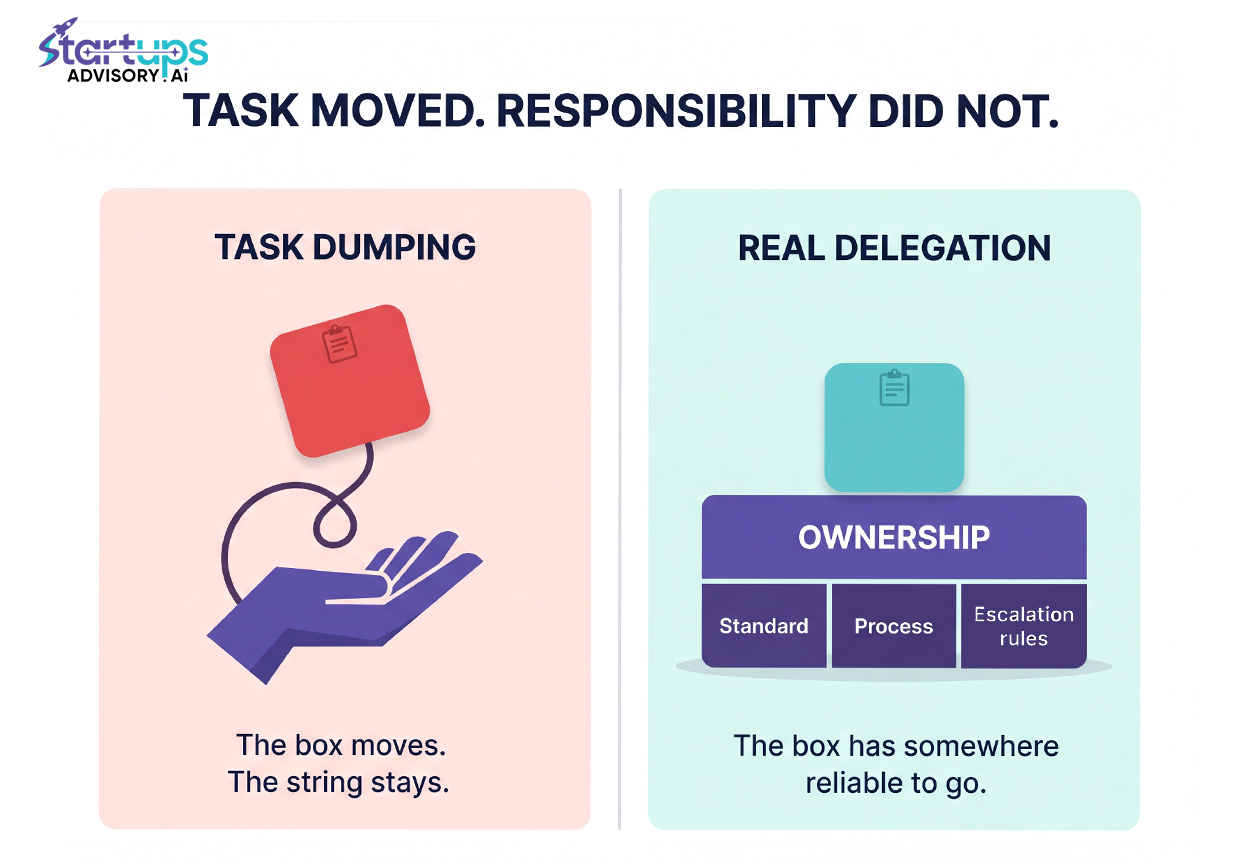
In other words, the task moved. The responsibility did not.
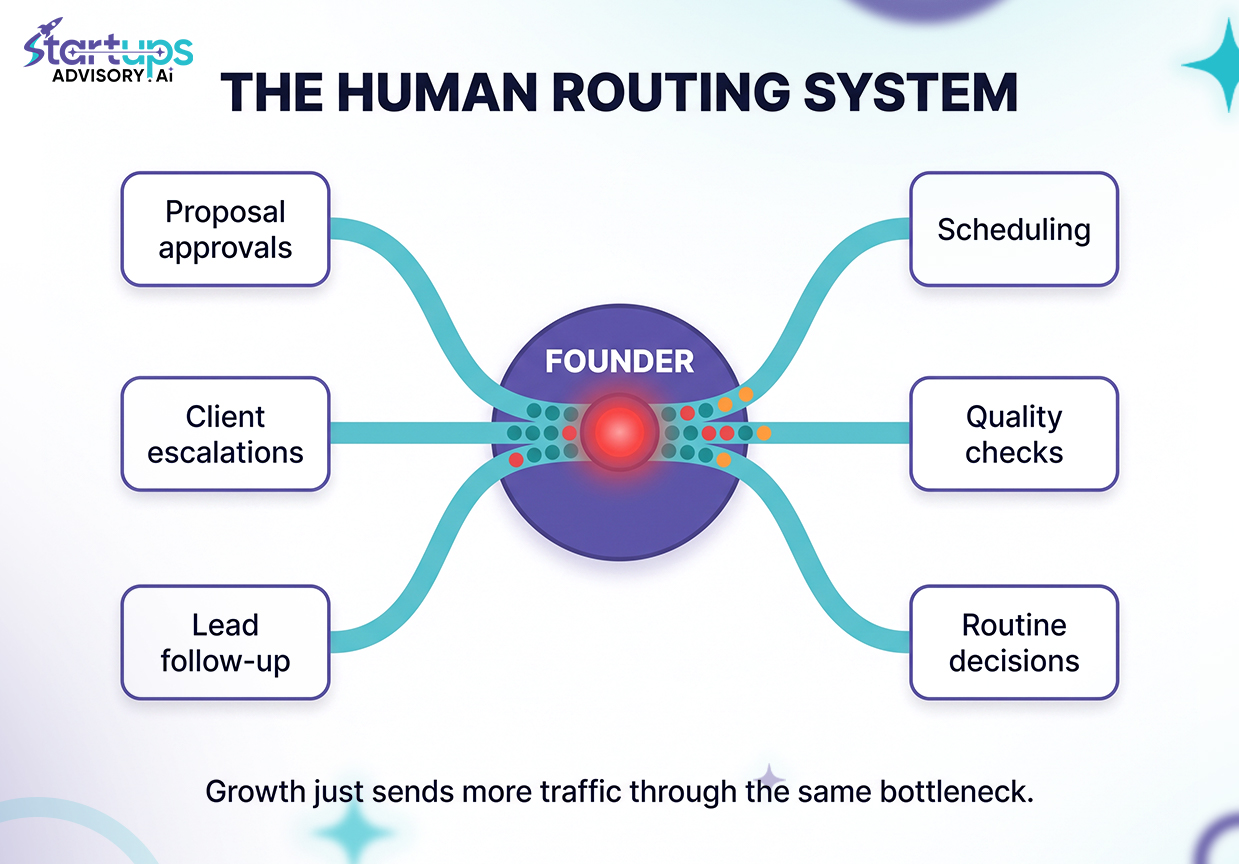
Think about an ordinary Tuesday. The founder approves a social post, tweaks a proposal, checks whether a CRM record was updated, answers a routine customer question, follows up on an overdue deliverable, and jumps into a campaign because nobody else wants to make the final call. None of those jobs feels enormous by itself, but together they turn the founder into the company’s human routing system.
That is why delegation belongs among useful business growth metrics. It measures how much capacity exists beyond one person’s calendar. If every additional customer sends another handful of tasks back to the founder, growth has not removed the bottleneck. It has simply sent more traffic through it.
Real Delegation Comes With Ownership
Good delegation is not just, “Can someone take this off my plate?” It works better when a function has an owner, a standard, a repeatable process, and clear rules for when something genuinely needs to be escalated.
Once that structure is in place, the founder can stay informed without sitting in the middle of every email, revision, handoff, and reminder. A useful weekly check is to ask what used to need founder involvement but no longer does, what still keeps coming back for approval, and why.
Those answers often expose the real issue: unclear roles, missing processes, weak training, or approval habits that made sense when the company was tiny but no longer do.
When Long Hours Become A Warning
Working hard comes with running a business. Launches can stretch the day, big deals sometimes need extra attention, and difficult weeks happen. The problem starts when long hours become the only thing keeping ordinary operations together.
That is not always a time-management problem. Sometimes the business itself is creating unnecessary work.
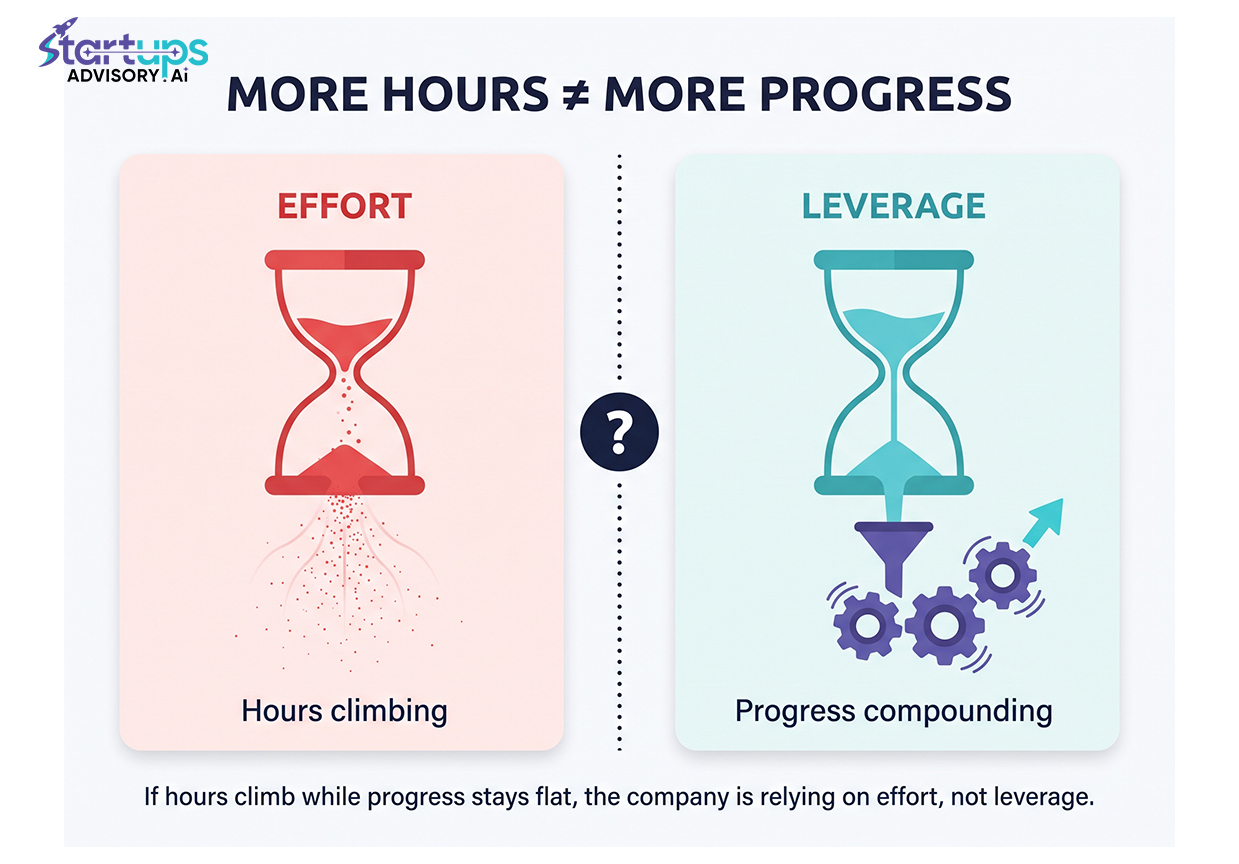
Manual follow-ups, scattered tools, unclear responsibilities, unnecessary approvals, and recurring tasks that should already have been delegated or automated can eat up an owner’s day piece by piece. Adding another hour might keep everything afloat tonight, but it does not fix what is causing the extra work.
A better question is what happens when the founder steps away. If leads stop getting followed up, approvals pile up, customers wait longer, or projects lose momentum, the company is still leaning too heavily on one person.
The goal is not to work as few hours as possible. It is to make sure founder hours are spent where founder judgment actually matters.
Read The Three Signals Together
Retention, delegation, and workload are most useful when viewed side by side.
| Growth Signal | Healthy Direction | Warning Sign | What To Examine |
| Customer retention | Customers renew, return, or stay engaged | Good customers quietly disappear | Onboarding, delivery, communication |
| Delegation | Repeatable work moves independently | Tasks keep returning for approval | Ownership, SOPs, accountability |
| Founder workload | Capacity grows without equal increases in hours | Every new client creates more owner work | Systems, automation, staffing |
A company can have happy customers and still depend heavily on its founder. Another may have tidy workflows but struggle with retention because the customer experience is not strong enough. When all three signals are heading the wrong way, the business tends to feel familiar: everybody is busy, fires keep popping up, and growth somehow refuses to break loose.
Run A Simple Three-Metric Check
Owners do not need another monster dashboard. A short weekly or monthly review can uncover a lot.
1. Check Customer Stickiness
Look at who renewed, returned, bought again, reduced their engagement, or left. Then ask what happened around those decisions. The number matters, but the pattern behind it is where the useful insight usually sits.
2. Audit Founder-Owned Work
Review the previous week and separate work that genuinely required founder-level judgment from work the founder handled simply because nobody else owns it yet.
That second pile deserves attention. It often contains the easiest opportunities to hand work over, document a process, automate a routine, or give someone clearer responsibility.
3. Compare Hours With Progress
If the founder worked more this month, what changed because of those extra hours? Did customer response improve? Did sales move faster? Did delivery become smoother? Did an important strategic project finally get finished?
Then fix one major constraint at a time. Trying to clean up retention, hiring, CRM, automation, marketing, and delegation all at once is a pretty reliable way to end up with six half-finished projects.
Stop Mistaking Busyness For Traction
Most founders build the early version of a company by jumping in wherever they are needed. They close sales, answer customers, fix processes, chase payments, review marketing, and solve the odd problems nobody else knows how to touch.
Early on, that can be exactly what the business needs. The trouble is that the habit often sticks around long after the company has outgrown it.
A full calendar starts to look like commitment. Late-night emails feel like proof of dedication. Stepping into every issue feels responsible. But a company does not become scalable because its founder gets better at catching falling plates. It becomes scalable because fewer plates need catching.
The founder’s role should gradually shift toward strategy, positioning, major relationships, partnerships, key hires, and decisions where their experience carries the most weight. Routine execution still matters; it simply should not all depend on one person.
A Tuesday That Feels Too Familiar
Imagine a small U.S. agency with steady demand. Projects are coming in, the team is busy, and revenue looks respectable. From the outside, things seem fine.
The founder starts the morning answering email. A salesperson needs help with a proposal, a client wants an update, a social post needs approval, a CRM entry is missing, and a designer is waiting on feedback. By late afternoon, the strategic work planned for the morning has barely been touched. Then another “quick thing” shows up.
Hiring one more employee may sound like the obvious answer, but if that person also needs constant direction, the founder has simply added another person to manage.
A better fix is to change how work moves. Give lead follow-up a clear owner. Make CRM updates part of a routine. Set guidelines around everyday creative decisions. Automate predictable tasks where it makes sense, and keep genuinely high-stakes decisions with the founder.
That is what useful delegation looks like. It is not dumping work on somebody else. It is giving ordinary work somewhere reliable to go.
Grow The Business, Not The Workday
If your calendar is packed but growth has stalled, you don’t need more hours—you need an operating system that runs without you sitting in the middle of every decision.
Curious how many founder-hours your current setup is burning? Get a quick, 15-minute Growth OS Audit to identify your biggest leverage points and see how StartupAdvisory.ai handles CRM execution, specialist delegation, and automation for you.
So, which one is holding the business back: retention, delegation, or hours?
Ready to get recurring growth work off the founder’s desk? Visit the website, email hello@startupadvisory.ai, or call 1 877 408 1285.
FAQs
What makes a good founder scorecard?
A useful scorecard stays focused on a small number of signals that lead to decisions. If nobody changes course because of a metric, it probably does not need to take up much space on the weekly dashboard.
How often should owners review growth metrics?
Operational indicators are worth checking weekly, while broader patterns can usually be reviewed monthly. What matters most is reviewing them consistently enough to notice changes before they turn into bigger problems.
How can a founder tell delegation works?
Delegation is working when recurring tasks reach the expected standard without repeated explanations, unnecessary approvals, constant reminders, or last-minute founder rescue.
When should a business hire more help?
Hiring makes sense when recurring work exceeds the team’s capacity or requires expertise the business does not currently have. Before hiring, owners should be clear about the outcome the new person will actually own.
Which growth metric should be fixed first?
Start with the signal creating the greatest drag on customers or execution. Fixing one meaningful bottleneck completely is usually more useful than making tiny improvements across several problems at the same time.