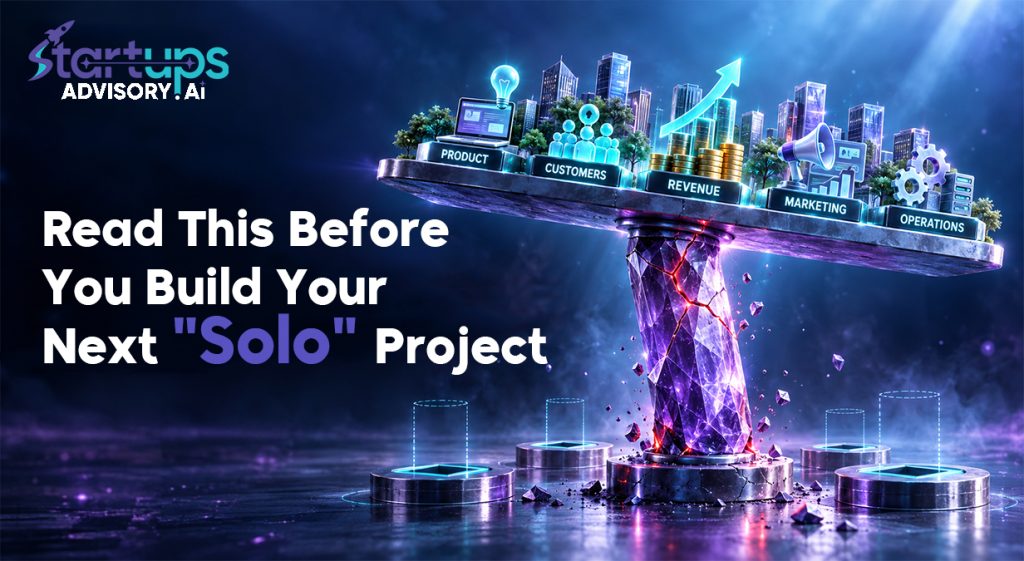
The solo founder advantage is real. So are the blind spots AI cannot remove.
You finally built the thing every solo founder dreams about.
Your product is working. Customers are signing up. Revenue is coming in. Your AI stack lets you move faster than companies ten times your size.
The advantages are obvious.
You make decisions quickly.
You do not wait for meetings.
You do not spend months coordinating a team.
You can test ideas, ship improvements, and respond to customers faster than companies with far more resources.
But as the company changes, the nature of the decisions changes with it.
The questions are no longer only about building faster.
They become questions about direction, priorities, customers, hiring, partnerships, and where your attention creates the most value
The business is still moving forward.
But the decisions become heavier.
A customer asks for a feature that could change your roadmap. A partnership opportunity requires careful judgment. A hiring decision could determine your next stage of growth.
More and more, those decisions end up waiting for one person: you.
The same independence that helped you start the company can eventually become a constraint when every important decision depends on the founder being available, informed, and right every time.
Key Takeaways
- AI has made solo building more viable, but capability and judgment are not the same thing.
- A team matters most when it adds perspective, expertise, relationships, or accountability—not just extra hands.
- You do not automatically need a cofounder, but you do need a plan for the capabilities you do not possess.
- Build lean if lean makes you faster. Do not build isolated if isolation makes you worse.
Can a Solo Founder Really Build a Company Alone?
Yes. And increasingly, people are doing exactly that.
According to Carta’s Solo Founders Report 2025, 36.3% of new companies in the first half of 2025 were solo-founded. Carta also points to AI and automation as forces expanding what an individual can build and sell without immediately assembling a conventional team.
That matters because the old startup formula is changing.
A founder once needed people simply to create enough output. Someone had to write the copy, build the site, organize information, answer routine questions, research competitors, prepare reports, and move tasks between systems.
AI can now absorb a meaningful portion of that execution.
Inc. recently documented founders using AI across coding, research, marketing, design, support, and operations before hiring traditional teams. Its reporting makes an important distinction: AI performs especially well when a founder can clearly define the work and recognize whether the result is good. The limitations become more obvious when the task depends on trust, taste, relationships, ambiguity, or decisions without an objectively correct answer.
That changes the economics of starting a company.
It does not eliminate the economics of expertise.
Why Speed Without Perspective Kills Startups
AI lets you move at astonishing speed, but accelerating the wrong strategy just gets you to failure faster.
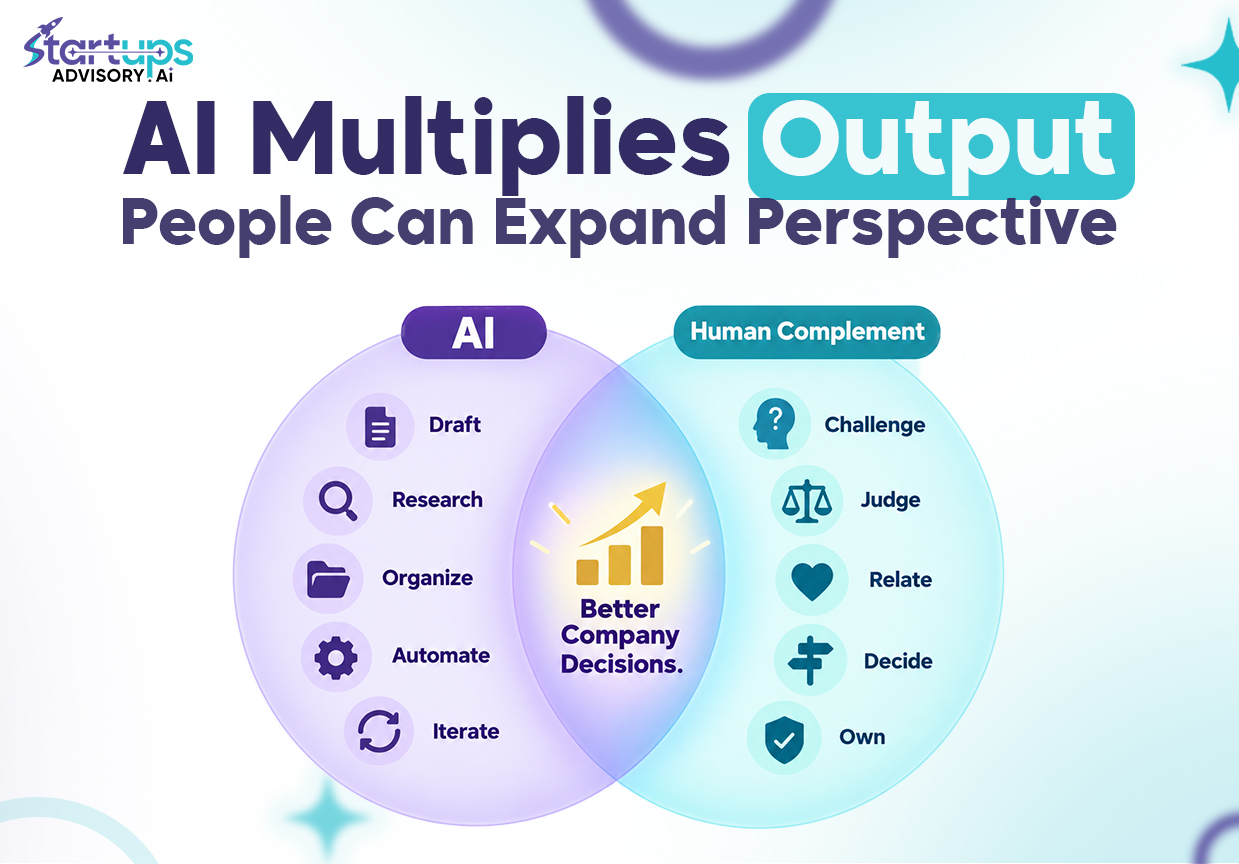
- Labor vs. Perspective: AI replaces the muscle of execution, not the judgment required to set the right direction.
- Flawless Misstep: You can now publish the wrong positioning, launch ads to the wrong audience, and automate outreach for an unwanted offer faster than ever.
- The Founder’s Job: AI generates outputs and inspects assumptions, but only a human can ask the right questions and spot flawed reasoning.
- Direction Over Velocity: Moving quickly is only valuable if you are heading toward a real market need.
Steve Jobs Wasn’t Talking About Headcount
Steve Jobs described The Beatles as his model for business.
His point was not that a company needs more bodies simply because there is more work.
He admired the way talented people balanced one another. One person’s tendencies could be checked by another person’s strengths. The combination could produce something none of them would have created independently.
Steve Jobs summarized the idea this way:
“Great things in business are never done by one person. They’re done by a team of people.”
That thought becomes more relevant—not less—in an AI-heavy startup environment.
The original reason to build a team included capacity. There was simply too much work.
AI weakens that reason.
But Jobs’s deeper argument survives: another capable person can contribute a different mind, not merely another pair of hands.
That is why the best modern startup team may be dramatically smaller than the teams of the past without becoming unnecessary.
What Does the Research Say About Solo Founders?
Recent research published in Strategic Management Journal gives us a useful middle ground.
Travis Howell and Todd Hall found evidence that solo-founded ventures face a performance disadvantage, while also finding that this disadvantage becomes less pronounced when founders bring greater breadth or depth of experience. Their work challenges both extremes: cofounders can supply valuable resources, but cofounders can also introduce destructive conflict.
That distinction matters.
A founder with deep product expertise, commercial experience, strong industry relationships, and broad operating judgment may be able to remain solo far longer than a first-time founder with one highly specialized skill.
The title “solo founder” tells you how many founders are on the cap table.
It tells you almost nothing about how much capability surrounds that person.
A solo founder might have advisors, contractors, operators, specialists, AI systems, experienced managers, and external partners.
Another solo founder might genuinely be making every important decision alone.
Those are very different businesses.
Where Does Working Alone Start Becoming Risky?
Use this distinction:
| Type of Work | Solo + AI Can Be Strong | Human Complement Becomes Valuable |
| Structured execution | Drafting, organizing, research support, repetitive workflows | Usually when quality cannot be judged easily |
| Specialist work | When the founder already understands the domain | When expertise is needed to detect subtle mistakes |
| Strategy | Exploring options and pressure-testing ideas | Choosing among ambiguous tradeoffs |
| Sales and partnerships | Prospecting, preparation, follow-up support | Trust-building, negotiation, relationship judgment |
| Leadership | Documentation, planning, analysis | Accountability, conflict, hiring, culture, difficult calls |
| Creative decisions | Generating concepts and alternatives | Taste, differentiation, brand judgment |
The lesson is not human good, AI bad.
It is simpler:
Use technology where the problem is execution. Add people where the problem is capability, judgment, relationships, or accountability.
The Four-Gap Test Before You Build Solo
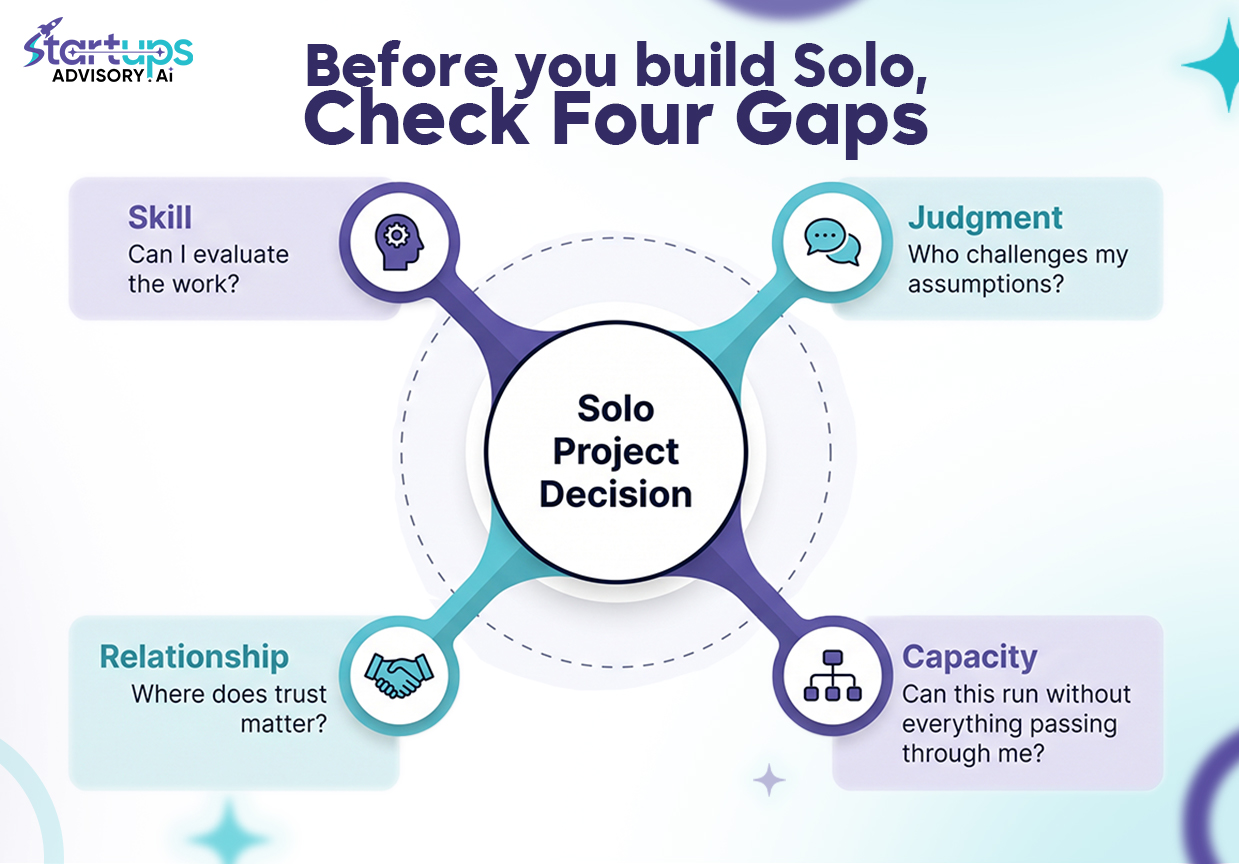
Before deciding that your next project should stay solo, run it through four gaps.
1. The Skill Gap
You ask AI to create your sales strategy. The messaging looks professional. The emails are polished. The campaign launches.
Three weeks later, nobody responds.
The problem was never execution.
The problem was knowing what a good strategy looked like
Not “What can AI produce for me?”
Ask whether you know enough to evaluate what AI produces.
There is a major difference between using AI to accelerate a skill you understand and using AI to impersonate expertise you do not possess.
The first creates leverage.
The second can create false confidence.
2. The Judgment Gap
Some problems do not have a clearly correct answer.
- Should you change positioning?
- Raise prices?
- Walk away from a major customer?
- Hire now or preserve the runway?
- Enter a new market?
Imagine you are deciding whether to raise prices.
AI can analyze competitors, customer feedback, and possible outcomes.
But it cannot sit across the table from your biggest customer and understand whether the relationship can survive that change.
The missing piece is not information.
It is judgment.
But somebody still has to own the tradeoff.
This is where another experienced mind can be disproportionately valuable—not because you need someone to complete another task, but because you need someone capable of seeing what you cannot.
3. The Relationship Gap
Businesses are built through people even when products are built through software.
Enterprise sales, partnerships, recruiting, customer trust, fundraising, difficult negotiations, and leadership all contain a human layer.
Inc.’s reporting on AI-enabled founders reaches the same boundary: technology can remove significant execution work, but founders continue to reserve relationship-heavy and ambiguous decisions for humans.
If your growth depends heavily on trust, staying isolated may create a constraint no automation stack solves.
4. The Capacity Gap
Finally, ask the painfully simple question:
If everything keeps working, can I continue operating this way?
Founders often notice capacity problems only after success creates them.
- More customers create more questions.
- More leads create more follow-up.
- More marketing creates more production.
- More revenue creates more operational coordination.
The project can still technically be “working” while the founder quietly becomes the system through which everything must pass.
That is not lean.
That is key-person dependency.
The Four-Gap Test is not a test of whether you need a cofounder. It is a test of what the business is missing.
The answer isn’t automatically “find a cofounder.” The answer is “fill the gap.”
That gap might be filled by an employee, advisor, specialist, contractor, operating partner, or AI. The structure should follow the problem.
Use AI aggressively where work is structured, testable, and reversible. Add people when the missing ingredient is judgment, expertise, relationships, or accountability.
When Solo Stops Being Lean
A technical founder building a B2B platform. AI helps with research, product development, website copy, outreach, demos, and support.
At first, staying solo works beautifully. Decisions are fast. Costs are low. There are no internal handoffs.
Then customers arrive.
One wants a feature that could distort the product roadmap. Another needs a custom agreement. Sales calls become more complex. Leads need real follow-up. Suddenly the founder is building in the morning, selling in the afternoon, and resolving exceptions at night.
The company has not failed.
Its constraint has changed.
That is the moment to diagnose the problem instead of reflexively hiring:
- If execution is the constraint, automate.
- If expertise is the constraint, add expertise.
- If relationships are the constraint, add relationship capacity.
- If judgment is the constraint, bring in another experienced mind.
- If coordination is the constraint, redesign the operating system.
The founder does not need to abandon lean thinking.
They need to stop confusing lean with being alone.
Build Small. Don’t Build Isolated.
Put all of this together, and the lesson is not that founders should rebuild the large teams AI just made less necessary.
It is almost the opposite.
Build smaller. Just don’t confuse small with isolated.
The next generation of startups will not be defined by how many employees they hire.
They will be defined by how effectively they combine founders, AI systems, specialized talent, and operational support into one execution engine
AI gives a capable founder enormous execution power. That means the modern company may need fewer people—but the people it does add can matter more. Instead of hiring another pair of hands, you can add someone who brings judgment you do not have, relationships you cannot automate, expertise you cannot safely imitate, or accountability that keeps the company from becoming an extension of one person’s blind spots.
That may be the more important AI shift: a tiny, highly complementary team can now possess the execution power of a much larger organization.
Instead of asking:
How many people can we eliminate?
Ask:
How few people can we have while still preserving the expertise, judgment, relationships, and accountability the company needs?
That is a much healthier definition of lean.
Start alone when independence creates speed. Change the structure when independence starts creating dependency.
What Should a Modern Founder Optimize For?
Not headcount.
Not the pride of doing everything yourself.
Not even automation for its own sake.
Optimize for founder leverage.
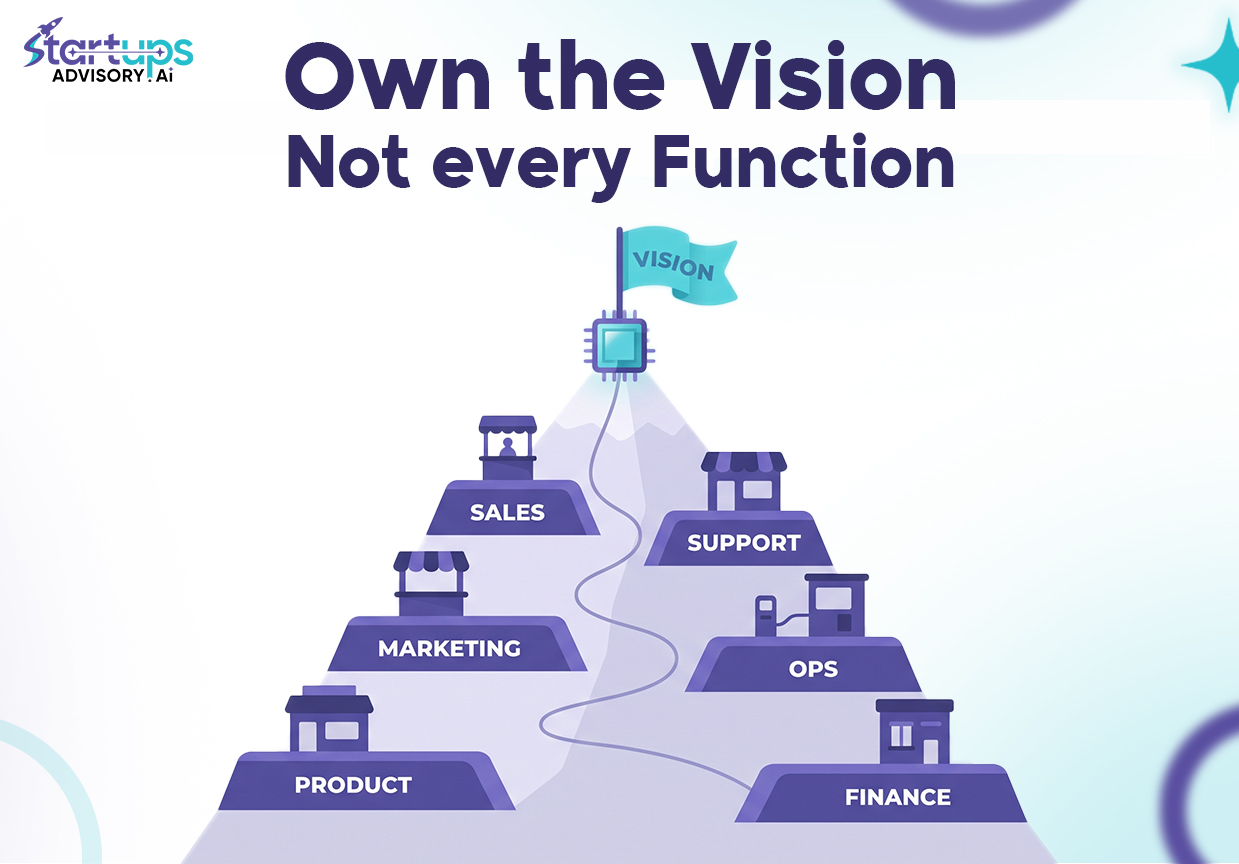
Your highest-value hours should increasingly move toward work that genuinely requires you: product direction, important customers, positioning, strategic relationships, hiring decisions, capital allocation, and the next major business bet.
Everything else should eventually have a sensible home.
That philosophy is also reflected in StartupAdvisory.ai‘s current Growth OS model. Rather than asking an overloaded founder to coordinate separate freelancers, agencies, and tools, the model combines a Dedicated Growth Assistant for execution, a Key Growth Manager for strategic direction, specialist teams for production, and AI and automation behind the operating layer. The stated goal is to move the founder away from being the person holding every workflow together and back toward higher-leverage founder work.
That does not mean every company requires the same structure.
It illustrates the broader principle:
A founder should own the vision without being forced to personally carry every function required to realize it.
The Real Solo Founder Advantage
It has rarely been easier to test an idea alone. AI is lowering barriers, accelerating execution, and allowing skilled builders to stay lean longer.
But the most capable founder isn’t the one who insists on doing everything isolated—it’s the one who recognizes when self-reliance becomes a bottleneck.
Before launching your next project, ask yourself: Am I still the best system for every critical task this company requires?
If the answer is changing as you scale, your infrastructure needs to evolve with it. That doesn’t mean you have to rush into bloated hiring or manage a chaotic mix of freelancers.
At StartupAdvisory.ai, we help founders bridge that gap. We combine strategic oversight, dedicated execution, and automation into a single operational engine—giving you the leverage of a complete growth team without the drag of traditional headcount.
Ready to build lean without building alone?
Explore how we support solo founders at StartupAdvisory.ai or reach out directly to start a conversation.
FAQs
Can a solo founder build a successful startup?
Yes. Solo founding can work, especially when the founder has strong skills and access to the expertise they lack.
Does a startup need a cofounder?
No. A cofounder is useful when they fill a meaningful skill, experience, or partnership gap.
Can AI replace a startup team?
Not entirely. AI can handle a lot of execution, but judgment, relationships, trust, and complex decisions still benefit from human involvement.
When should a solo founder start hiring?
When important work consistently waits on the founder or the business needs expertise, relationships, or capacity they cannot provide alone.
What should a solo founder automate first?
Start with repetitive, structured, low-risk tasks such as documentation, scheduling, CRM updates, research support, and routine workflows.
What should founders avoid delegating completely to AI?
High-stakes decisions involving strategy, hiring, negotiations, major customers, and brand judgment should retain human ownership.
How can StartupAdvisory.ai help an overloaded founder?
StartupAdvisory.ai combines execution support, strategic oversight, specialist teams, and automation to reduce the operational load on founders.
Is StartupAdvisory.ai only for founders with large teams?
No. Its model is also relevant to solo founders who need more support without immediately building a large internal team.
What is the biggest mistake when building a solo project?
Treating “solo” as an identity. Stay solo while it creates speed; change the structure when it starts creating limitations.