
Small business cash reserves are not money waiting to be spent. They are the breathing room that lets an owner keep paying bills, make clear decisions, and stay in control when cash arrives later than expected.
A business owner can have a great month on paper and still feel nervous opening the bank account on Friday. Sales are up, invoices have gone out, and the profit-and-loss statement looks respectable, yet payroll is due before several customers are expected to pay. That is the uncomfortable gap between revenue and usable cash.
The harder question is how much cash should a business have on hand instead of spending it on hiring, marketing, equipment, or the next growth push?
A useful reserve gives a company time to handle a slow month, a late-paying client, or an unexpected expense without making a panicked move.
Put simply, small business cash reserves buy time. The right amount is enough to cover essential obligations through a realistic rough patch without leaving so much idle cash that the business is afraid to invest in sensible growth.
Key Takeaways
- 3 to 6 months of essential operating expenses is a useful starting range, not a universal rule.
- Businesses with seasonal revenue, slow collections, or heavy customer concentration usually need a bigger cushion.
- Runway and net burn rate should be calculated from essential cash outflows, not from top-line revenue alone.
- A reserve works best when the company also fixes the operational bottlenecks and cash conversion cycles that keep draining cash.
The Difference Between Profit and Usable Cash
Why Revenue Doesn’t Equal Cash Flow
Revenue gets plenty of attention because it is easy to celebrate. Cash is less glamorous, but it decides whether a business can make payroll, pay rent, cover insurance, keep essential software running, and handle a surprise without reaching for emergency financing.
That distinction matters especially when customers pay after the work is done. A consulting firm can book a strong quarter while waiting weeks for payment, and a contractor can have a full calendar while still getting squeezed between payroll, materials, and customer payment schedules.
“When bills come due, only cash is legal tender. Don’t leave home without it.”
— Warren Buffett, Berkshire Hathaway’s 2014 shareholder letter.
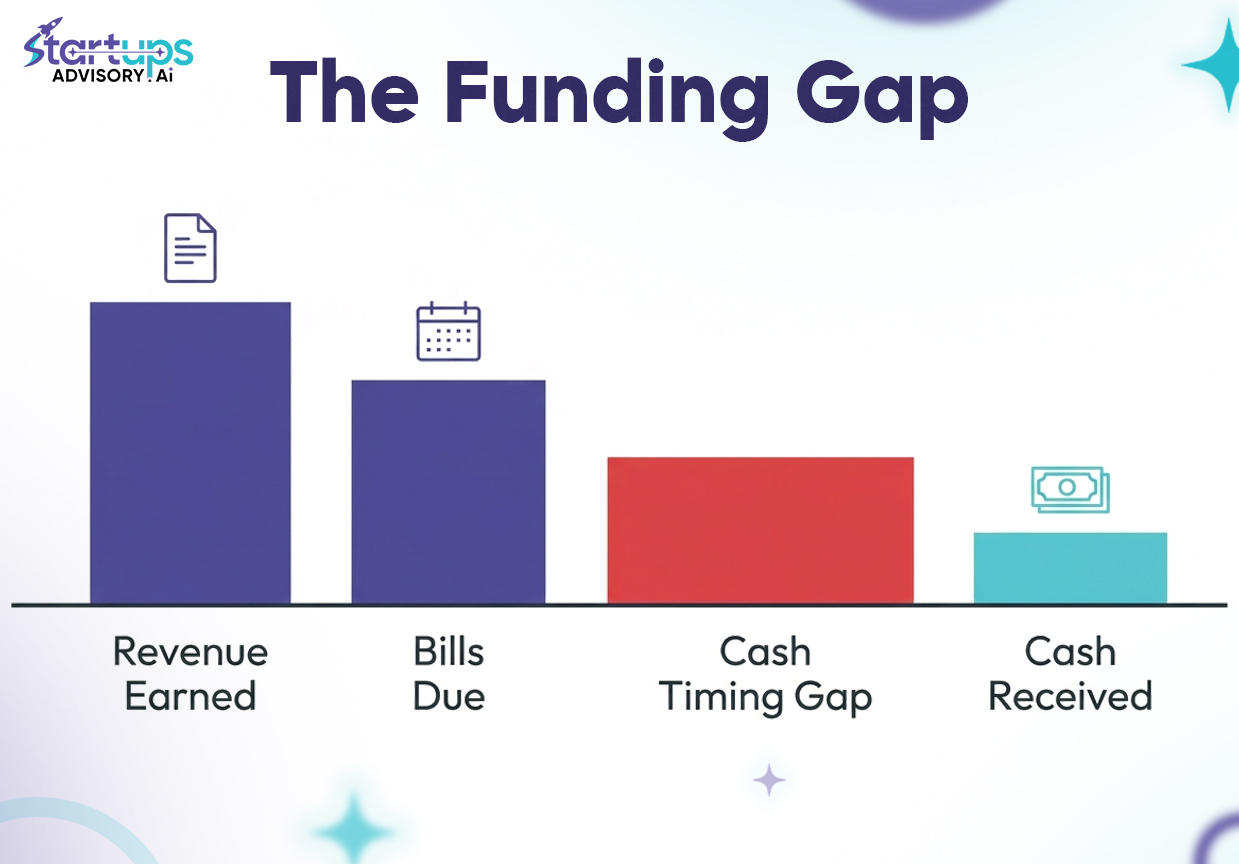
The Funding Gap Challenge
A reserve gives the owner room to manage those timing gaps. Outside financing may not arrive exactly when it is needed: the Federal Reserve Banks’ 2026 report on employer firms found that about one-third of firms faced a funding gap even after applying for financing. Cash on hand is therefore part of a company’s ability to make decisions before circumstances make them instead.
How Much Cushion Is Really Enough?
The 3 to 6 Month Benchmark
There is no single dollar amount that fits every small business. A practical starting point is enough cash to cover roughly three to six months of operating expenses, a range commonly used in small-business guidance.
The important phrase is the starting point.
Matching Reserves to Your Business Model
A stable professional-services firm with recurring monthly retainers, low overhead, quick collections, and diversified clients may be comfortable closer to the lower end. A seasonal company, project-based contractor, retailer carrying inventory, or business that relies heavily on one or two customers may want considerably more protection.
The reserve target should answer a real operating question: if revenue slowed sharply tomorrow, how long could the business continue meeting the obligations that cannot easily be switched off?
Calculating Your Target
Identifying True Core Expenses
An owner can begin with a simple calculation:
Cash reserve target = essential monthly operating expenses × target months of coverage
Essential costs typically include the bills that keep coming even when sales cool off: core payroll, rent, insurance, debt payments, minimum utilities, critical software, and other commitments that cannot be cut overnight.
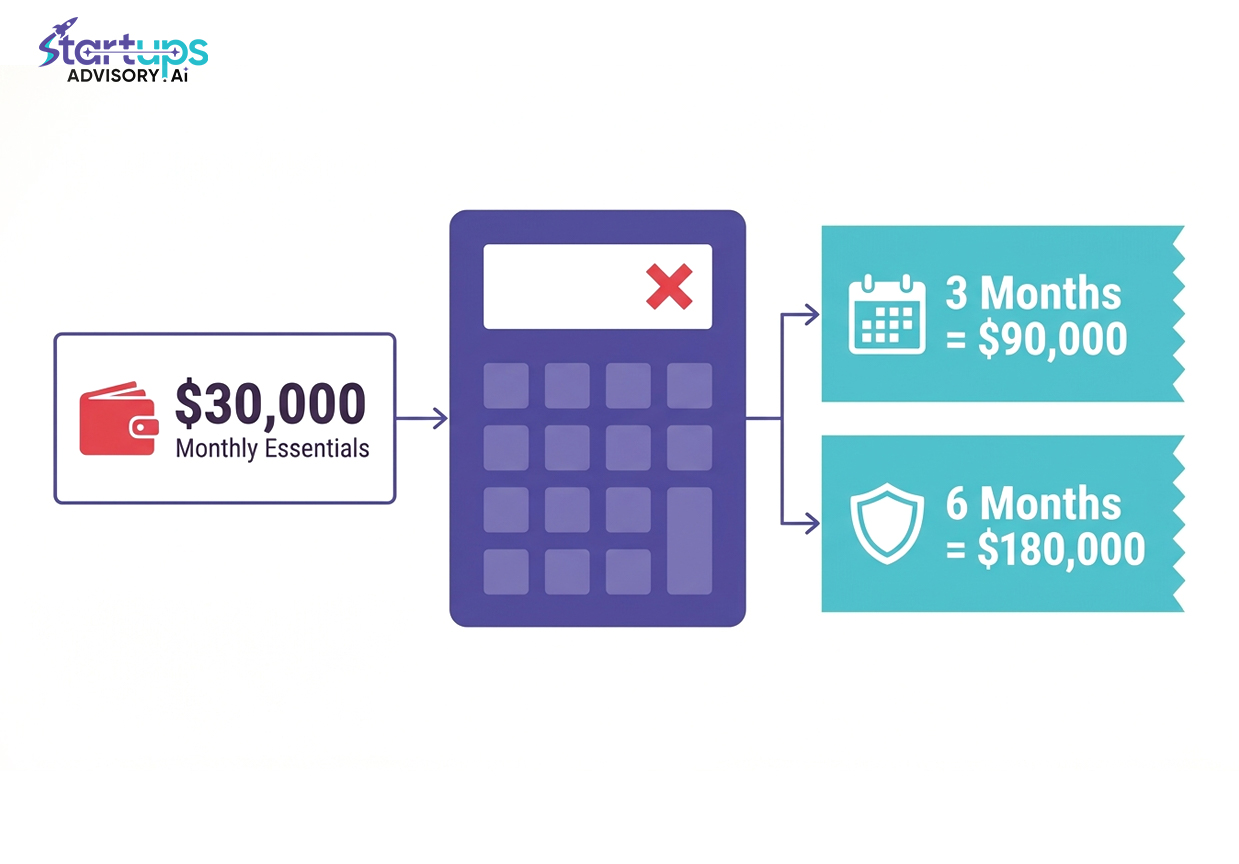
Worked Example: The $30,000 Baseline
Suppose a hypothetical service business needs $30,000 each month to cover its essential operating base. A three-month cushion would mean $90,000; six months would mean $180,000. Those figures are not recommendations for every business. They simply show how the framework turns a vague idea such as “we should save more cash” into a number the owner can actually plan around.
5 Operational Pressures That Demand a Larger Cash Cushion
Two firms with the same annual revenue can need very different reserves because their cash arrives and leaves on different schedules.
1. Seasonal and Project-Based Revenue Fluctuations
Seasonal businesses should plan around the slow part of the year, not the best month on the calendar. The reserve has to bridge the quieter stretch.
2. High Customer Concentration Risks
If one account represents a large share of monthly revenue, losing it can hit quickly. A bigger buffer gives the company time to replace that business instead of grabbing the first low-margin work available.
3. Extended Payment Terms and Slow Receivables
A profitable invoice is not cash in the bank. Long payment terms or inconsistent collections increase the gap between doing the work and getting paid.
4. Rigid Fixed Costs and Payroll Commitments
A solo consultant can cut expenses faster than a business supporting a full team or field crew. More fixed commitments usually call for more runway.
5. Managing Your Cash Conversion Cycle
The longer capital is tied up in unpaid invoices, inventory, or unbilled work, the greater the drag on your daily operating cash. Addressing operational bottlenecks speeds up cash collection and reduces the burden on your reserve.
| Business Pattern | Reserve Pressure | Why It Matters | Useful Response |
| Predictable recurring revenue | Lower | Cash timing is easier to forecast | Maintain a defined floor and review it regularly |
| Seasonal or project-based sales | Higher | Slow periods can last for months | Build around the weakest season, not the average month |
| Heavy customer concentration | Higher | Losing one account can hit hard | Add cushion while diversifying revenue |
| Slow receivables | Higher | Booked revenue may arrive late | Tighten invoicing and follow-up |
| High fixed payroll or leases | Higher | Costs cannot drop quickly | Keep more runway before adding commitments |
How Founders Calculate Cash Runway and Burn Rate
Cash Reserve vs. Cash Runway: What’s the Difference?
Cash reserve and cash runway are closely related, but they answer slightly different questions. A reserve is the dollar amount set aside; runway expresses how long available cash could support the business under a defined net burn rate
A basic operating-coverage calculation is:
Months of coverage = available reserve ÷ essential monthly cash outflow
The math is easy; the inputs require judgment. An unusually strong month can make runway look better than it really is.
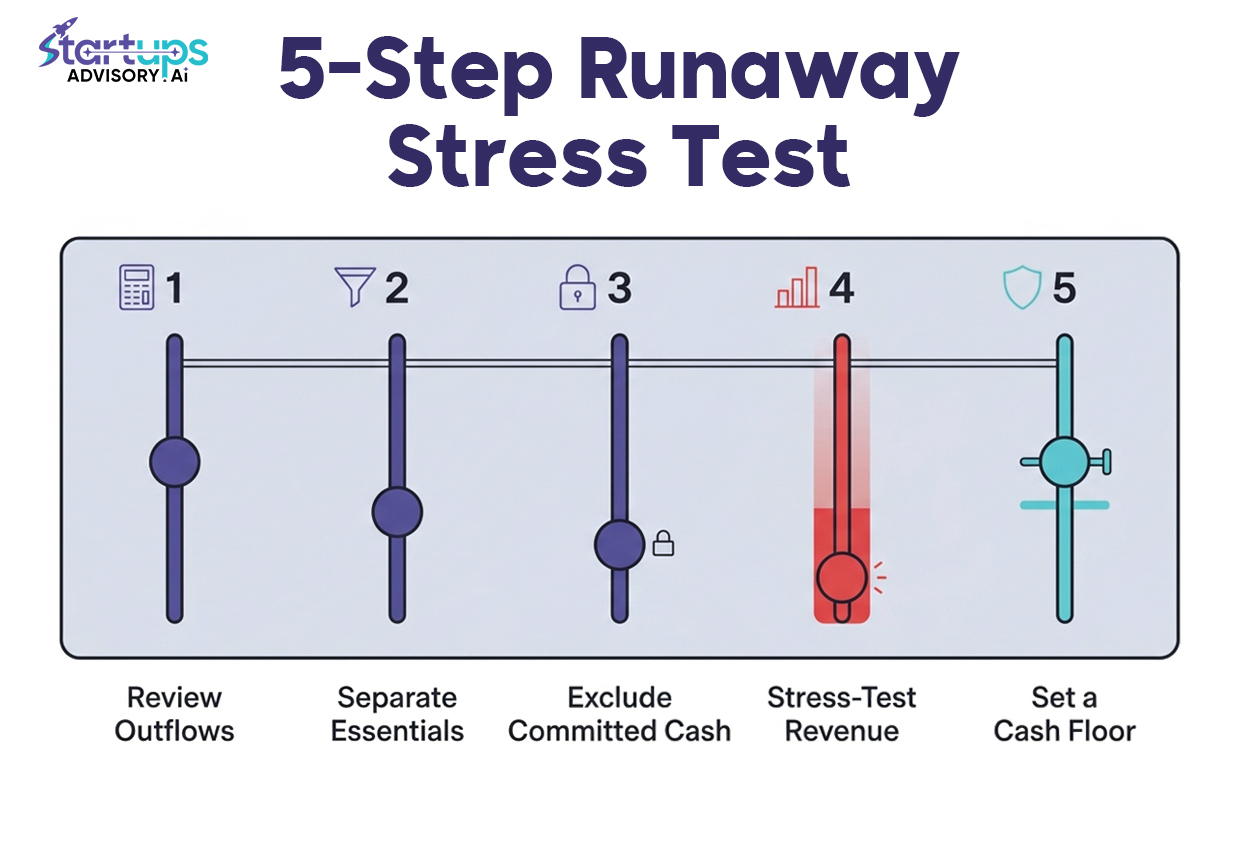
A 5-Step Framework to Stress-Test Your Operating Runway
A practical five-step check can keep the number grounded:
- Pull recent cash outflows. Use several normal months rather than one unusually good or bad period.
- Separate essential from optional spending. Know what the business truly has to keep paying.
- Identify cash already spoken for. Taxes, customer deposits, and near-term obligations are not free spending money.
- Stress-test the revenue side. Consider what happens if a major payment arrives late or sales dip.
- Set a minimum cash floor. Decide the level that should trigger tighter spending and closer review.
Setting Your Minimum Cash Floor
A written floor removes guesswork. The owner already knows when the balance has crossed into a zone that calls for action before an actual shortfall occurs.
Can a Small Business Hold Too Much Cash?
Balancing Financial Safety with Reinvestment
Once the reserve covers the chosen risk range, additional cash should be evaluated in context. Some may be committed to taxes or working capital; some may be available for hiring, technology, customer acquisition, equipment, or debt reduction.
Deploying Excess Working Capital for Growth
The goal is not to hold as much cash as possible. It is to protect the business while still putting excess working capital to work where the risk and expected return make sense. A reserve should give leadership confidence to make sensible decisions, not turn caution into a reason to put every growth opportunity on ice.
How to Build Your Cash Reserve Without Stalling Growth
Establishing a Repeatable Saving Routine
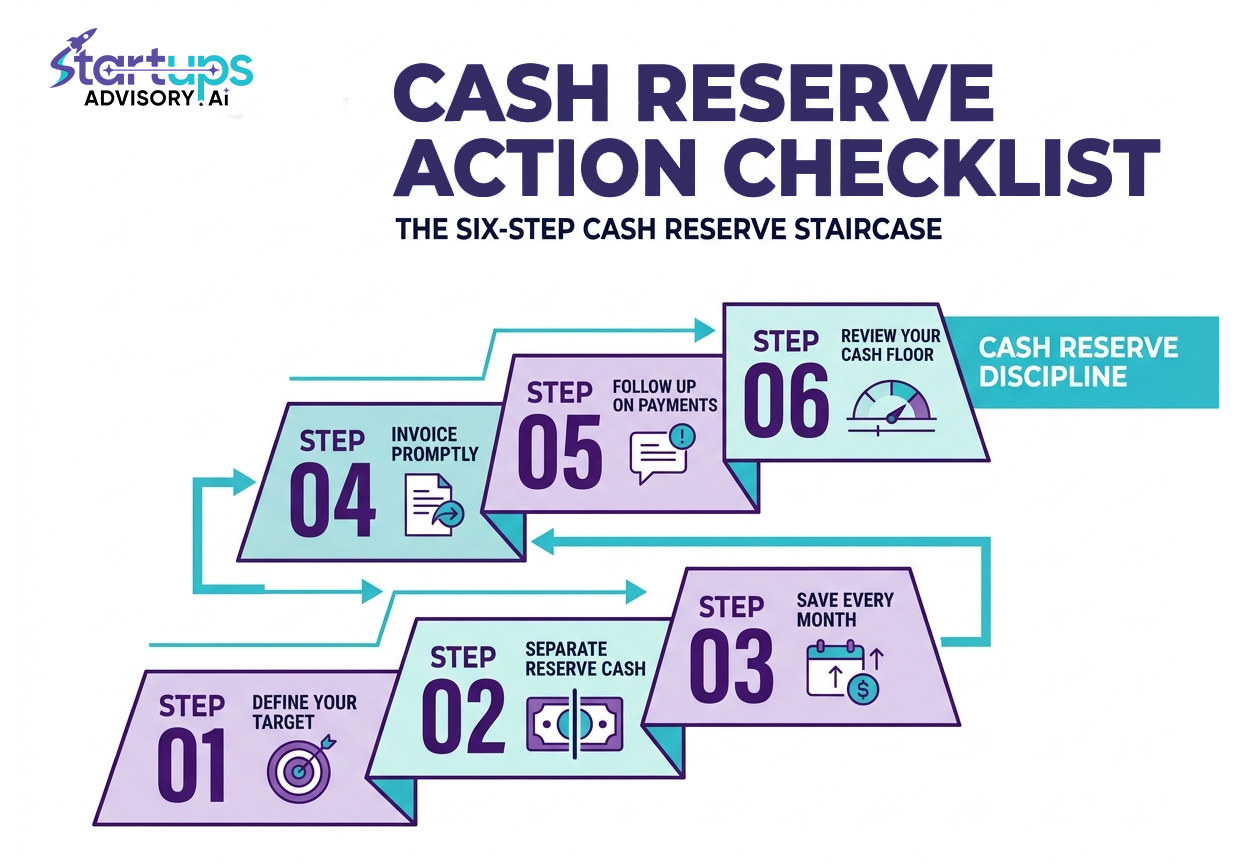
For a business starting from a thin cash position, jumping straight to a multi-month target can feel unrealistic. The better approach is to build the reserve as a repeatable habit rather than waiting for one unusually profitable month. That cushion matters in practice: among employer firms that experienced financial challenges, 47% used cash reserves to respond, according to the Federal Reserve Banks’ 2026 Small Business Credit Survey. Define the target in dollars, keep reserves separate from operating cash, and contribute consistently each month.
Fixing Cash-Draining Operational Processes
At the same time, work on the causes of cash pressure. Faster invoicing, clearer collection routines, better customer follow-up, fewer unused subscriptions, disciplined hiring, and smoother sales execution can make building the reserve easier.
Consider a hypothetical small agency with healthy sales that routinely waits on large client payments. Instead of treating every tight month as a sales problem, the owner tightens invoice timing, assigns follow-up ownership, sets a minimum reserve floor, and gradually builds several months of essential coverage.
Keep Enough Room To Choose
Healthy cash management is not about chasing one perfect number. Small business cash reserves should reflect how predictable revenue is, how quickly customers pay, how concentrated the client base is, how fixed the cost structure is, and how much uncertainty the owner is willing to carry. Three to six months can be a useful place to begin, but the better target is the one built around the actual business rather than an internet rule. When that cushion is paired with tighter operations and regular review, cash stops being something the founder checks nervously and becomes something the business can plan around.
However, tightening operations while running daily business growth takes dedicated hands on deck.
Once your financial target is clear, StartupAdvisory.ai helps execute the operational side. Through Growth OS, a Dedicated Growth Assistant, strategic growth management, CRM execution, digital marketing, and AI automation, we handle recurring growth tasks so you can focus on building runway.
Build growth without running the tank dry. Visit the website, email hello@startupadvisory.ai, or call +1(877)-408-1285.
FAQs
Should tax money count as reserve cash?
Usually, money already set aside for taxes should be treated as committed rather than available runway. A reserve is most useful when it represents cash the business can genuinely use for operating needs.
Where should emergency business cash sit?
It should generally remain liquid and accessible enough for the purpose it serves. Owners should discuss the specific account structure, yield, insurance coverage, and tax considerations with appropriate financial professionals.
Does a credit line replace cash?
Not completely. Credit can add flexibility, but approval, limits, costs, and availability can change. A cash reserve gives the business liquidity it already controls.
Should startups build cash before hiring?
The answer depends on runway, revenue visibility, and how essential the hire is. A new fixed salary commitment should be tested against a conservative cash forecast before the company takes it on.
When should a reserve be used?
A reserve can be appropriate for genuine cash-flow gaps, unexpected essential expenses, or planned situations the business specifically built the cushion to handle. It should not become the default fix for a recurring unprofitable operating model.